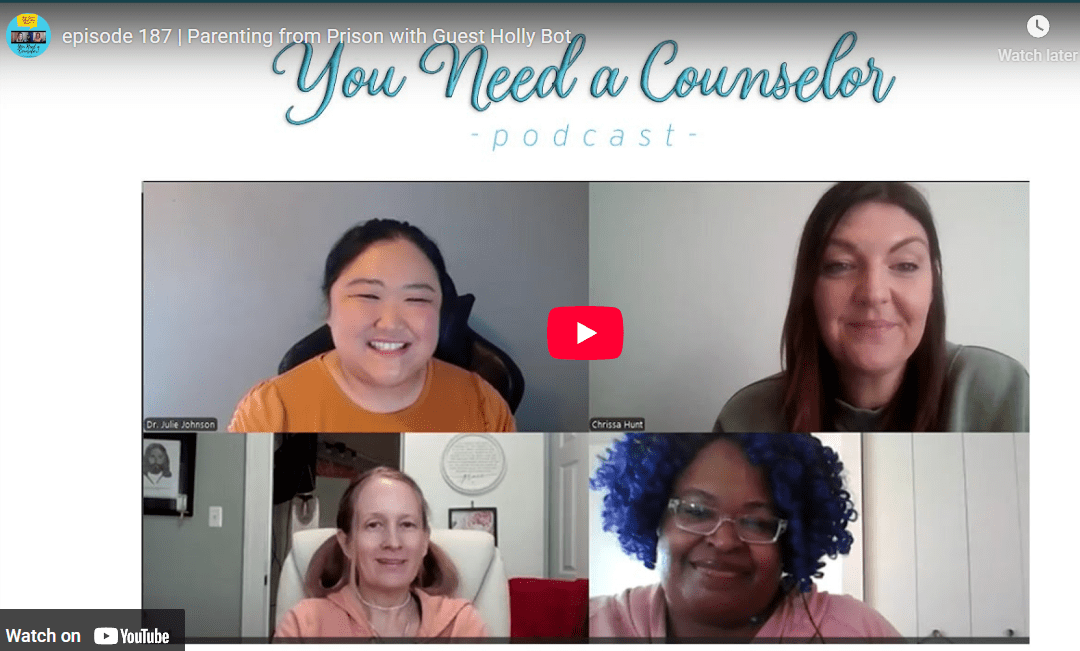
The podcast episode of You Need a Counselor features Holly Bot, a returning guest who shares her inspiring journey of incarceration, re-entry, and transformation. Holly, an IT solution architect and now a counseling student, recounts her eight-year prison sentence starting in 2011, detailing the profound effects of incarceration on identity, mental health, family relationships, and reintegration into society. Holly highlights the challenges she faced in prison, including losing her previous identity as a “super mom” and high achiever, and the trauma endured through repeated dehumanizing experiences like strip searches. She emphasizes the crucial internal work she did to rediscover herself during incarceration, cultivating resilience and new coping tools.
After release, Holly faced the daunting task of reconnecting with her children, some of whom had grown into adulthood, while others were still teens. She creatively maintained a parenting role through weekly letters, phone calls, and even reading books aloud over the phone. The episode also explores the dynamics of maintaining a relationship with her husband, who remains incarcerated, and how attending the same university fosters a unique bond despite physical separation.
Holly is now pursuing a degree in counseling with a focus on biblical counseling and personal training, drawing connections between mental health, behavior change, and physical wellness. She discusses the importance of lifelong learning as a form of personal growth beyond transactional education and highlights the value of individualized, self-directed study at Metro State University.
The conversation delves deeply into the realities of reentry after incarceration, underscoring the need for patience, understanding, and pacing by friends and family as formerly incarcerated individuals adjust to new technologies, social norms, and responsibilities. Holly advocates for recognizing the trauma endured during incarceration and the slow, often painful process of reclaiming autonomy and identity post-release.
The episode concludes with appreciation for Holly’s vulnerability and empathy, highlighting how her lived experience and educational pursuits uniquely position her to impact the counseling field and support others navigating mental health and reentry challenges.
Highlights
- [00:00] 🎓 Education as intrinsic growth, not just transaction for career
- [02:19] 🔥 Holly’s inspiring journey from incarceration to IT architect and counselor-in-training
- [06:12] 🧠 Intersection of counseling and personal training: behavior change and holistic wellness
- [13:11] 📚 Unique self-directed education model at Metro State University
- [18:38] 💕 Maintaining a relationship with an incarcerated spouse through shared education
- [24:29] 🔄 Challenges of reentry: technology gaps, identity shifts, and family dynamics
- [48:21] 🕊️ The importance of pacing and trauma-informed support during reentry
Key Insights
- [00:00] 🎓 Education Beyond Transaction
Holly and hosts emphasize that education should be valued for personal growth and self-discovery rather than merely a means to secure a job. This philosophy fosters lifelong learning and intrinsic motivation, which are crucial for sustained fulfillment and adaptability, especially for those navigating complex life transitions like reentry from incarceration. - [02:19] 🔥 Transformation Through Trauma
Holly’s story illustrates how incarceration, despite its trauma, can become a catalyst for profound self-reflection and growth. Her ability to find internal strength and thrive despite adversity challenges common narratives about prison and highlights the human capacity for resilience. - [06:12] 🧠 Holistic Health: Mind and Body Connection
The crossover between biblical counseling and personal training reflects an emerging understanding that mental health and physical wellness are deeply intertwined. Behavior change techniques, such as motivational interviewing, are effective tools that serve both fitness and counseling goals, promoting sustainable lifestyle improvements. - [13:11] 📚 Innovative Self-Directed Learning
Metro State University’s individualized studies program allows students like Holly to tailor their education to their interests and needs, fostering ownership of the learning process. This model is particularly empowering for adult learners and those with unique backgrounds, like formerly incarcerated individuals, enabling them to bridge gaps in traditional curricula. - [18:38] 💕 Maintaining Relationships Across Prison Walls
Shared educational experiences between Holly and her incarcerated husband provide a vital connection, helping to maintain intimacy and mutual understanding despite physical separation. Their communication is enriched by shared vocabulary and experiences, which mitigate some challenges of long-distance relationships in incarceration contexts. - [24:29] 🔄 Reentry as Identity Reconstruction
Holly describes reentry as a complex process of redefining identity and acquiring new tools to navigate a changed world. The skills and coping mechanisms developed pre-incarceration and during prison often do not transfer seamlessly, requiring patience and support as formerly incarcerated individuals adjust to new social and technological realities. - [48:21] 🕊️ Trauma-Informed Support for Reentry
The episode underscores the necessity for friends, family, and communities to adopt trauma-informed approaches in supporting returning citizens. Recognizing the ongoing psychological impact of incarceration—including hypervigilance, emotional numbing, and dehumanization—is essential to providing compassionate and effective reintegration assistance.
Extended Analysis
Holly’s narrative vividly depicts incarceration’s profound disruption to identity, highlighting the loss of her role as a caregiver and the resulting grief, trauma, and existential disorientation. For many incarcerated individuals, the forced severance from familial roles and societal participation triggers a “death” of one’s former self, requiring the creation of new identities to survive and eventually thrive. Holly’s methodical approach to rediscovering personal preference and autonomy—such as deciding if she wanted to go outside in prison—demonstrates the painstaking reclaiming of agency in an environment designed to strip it away.
Her creative parenting methods while incarcerated reveal the deep human need to maintain connection and nurture relationships despite physical barriers. The use of weekly letters, phone calls, and even reading books aloud exemplifies how technology and proactive efforts can mitigate the emotional distance imposed by incarceration.
The podcast also sheds light on the systemic challenges of reentry, including the rapid technological advancements that can alienate returnees, and the social expectations that pressure them to “bounce back” quickly. Holly’s counsel to pace oneself and the analogy comparing reentry trauma to that of victims of violent crimes provide vital perspectives often missing from public discourse. These insights call for a more compassionate societal approach to reentry, emphasizing healing and gradual reintegration rather than immediate productivity.
The integration of biblical counseling and personal training in Holly’s educational pursuits reflects a holistic wellness paradigm that aligns physical health with mental and spiritual well-being. Her interest in motivational interviewing as a shared tool between counseling and fitness highlights the importance of addressing behavioral roots to effect lasting change.
Finally, the individualized, self-directed educational model at Metro State University serves as a powerful example of how higher education institutions can better serve nontraditional students, especially those with incarceration histories, by allowing them to carve out academic paths that are personally meaningful and professionally relevant.
Overall, Holly’s story and reflections provide a multifaceted lens through which to understand incarceration, reentry, education, and healing—offering hope and practical wisdom to counselors, educators, families, and formerly incarcerated individuals alike.